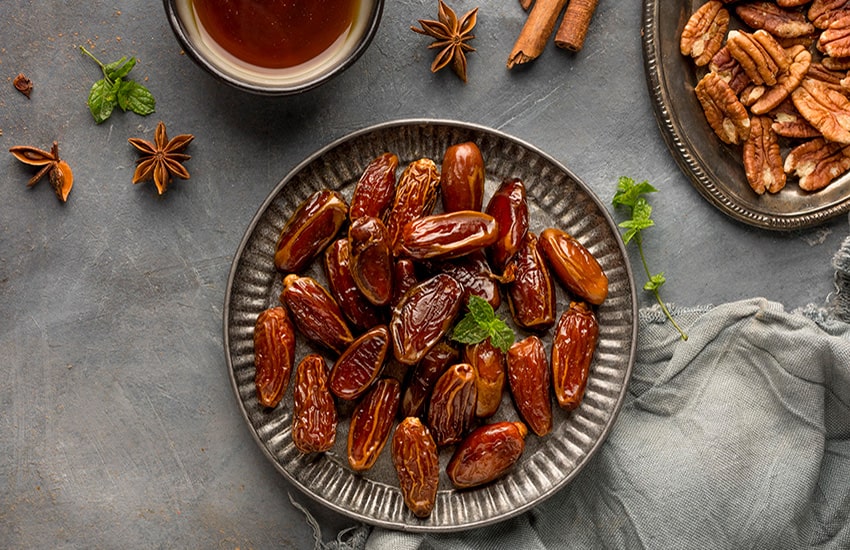
Iran is one of the world’s largest date producers, offering a wide variety of high-quality dates thanks to its diverse climate. Understanding export-grade Iranian dates and their characteristics is essential for selecting the right product for target markets.
Below are the most important Iranian export date varieties:
🌴 Mazafati Dates
Mazafati is one of the most popular and widely consumed Iranian dates. It has a soft texture, dark color, and a rich sweet taste.
Characteristics:
-
High moisture content
-
Soft texture and sweet flavor
-
Popular in Middle Eastern, Russian, and European markets
-
Requires cold storage
🌴 Piarom Dates
Piarom dates are considered one of Iran’s most premium export products. They are semi-dry with an elongated shape and thin skin.
Characteristics:
-
Natural sugar with low glycemic index
-
Long shelf life
-
Ideal for European and premium markets
-
High-value export product
🌴 Zahedi Dates
Zahedi dates are dry to semi-dry and known for their excellent shelf life, making them ideal for long-distance exports.
Characteristics:
-
Yellowish-brown color
-
Mild, non-sticky taste
-
Easy transportation and storage
-
High demand in Asian and African markets
🌴 Kabkab Dates
Kabkab dates are large, fleshy, and moderately priced, making them suitable for bulk exports.
Characteristics:
-
Sweet taste
-
Semi-moist texture
-
Widely used in food processing industries
-
Suitable for large-scale export
🌴 Sayer (Estamaran) Dates
Sayer dates are mainly produced in Khuzestan province and represent a significant share of Iran’s date exports.
Characteristics:
-
Competitive pricing
-
Good shelf life
-
High global demand
-
Ideal for bulk export
🔹 Conclusion
Each Iranian export-grade date variety has unique characteristics and target markets. Choosing the right date type, professional packaging, and compliance with international standards are key factors in successful date exports. Companies with deep market knowledge can effectively position Iranian dates in global markets.